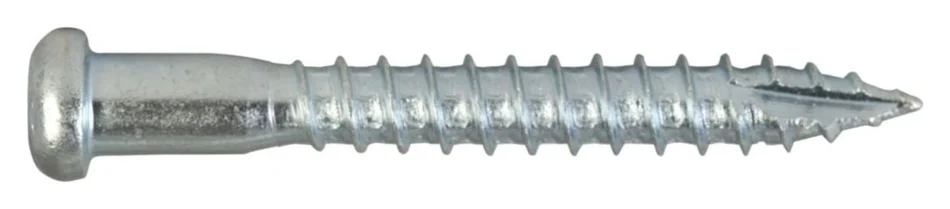
Connector screws for brackets and plates, C3 coated
3 sizes · 5 × 40 – 5 × 60 mm · Boxes from 13.59 €
EASY-FIX connector screws with C3 coating are made for fixing perforated angle brackets, plates, joist hangers and other steel connectors to timber. All screws in the line are 5 mm in diameter with a Torx TX 20 drive, in lengths from 40 to 60 mm. The coating is for corrosivity category C3, a moderately corrosive environment.
- Brand
- EASY-FIX
- Coating
- C3
- Drive
- TX 20
- Diameters d
- 5 mm
- Lengths L
- 40–60 mm
- Per box
- 250–500 pcs
| Size | Code | Pack | Box price incl. VAT | Price per piece | Availability | Order | |
|---|---|---|---|---|---|---|---|
| 40 mm | EASY-BS-C3-40 | 500 pcs | 17.49 € | 0.035 €/pc | In stock | 500 pcs · In stock · 0.035 €/pc | |
| 50 mm | EASY-BS-C3-50 | 500 pcs | 23.59 € | 0.047 €/pc | In stock | 500 pcs · In stock · 0.047 €/pc | |
| 60 mm | EASY-BS-C3-60 | 250 pcs | 13.59 € | 0.054 €/pc | In stock | 250 pcs · In stock · 0.054 €/pc |
Price per box, incl. VAT
Where they are used
Connector screws fix steel connectors to timber: perforated angles, flat and angle plates, joist and rafter hangers, and brackets. They are used in timber-frame houses, roof structures, floors, carports, sheds and covered decks. They suit any job where timber members are joined through metal connectors.
Connector steel is only a few millimetres thick, so almost the whole length of the screw goes into the timber. Unlike partially threaded structural screws, there is no thick member to clamp. The screw works in the timber directly behind the connector.
C3 coating and TX 20 drive
The C3 coating is intended for a moderately corrosive environment. It suits places where moisture can occur, such as unheated buildings, lofts, carports and structures under a roof. In dry interiors, zinc-plated connector screws are usually enough. For exposure to direct rain, coastal sites or constantly damp conditions, choose fixings with a higher corrosivity category. Bear in mind that treated timber can be more aggressive to steel than untreated wood.
All screws in this line have a Torx TX 20 drive. The star recess holds the bit well, so it is less likely to cam out when you drive at an awkward angle, for example overhead or in a tight space between joists.
Choosing the length
The diameter is the same across the line; only the length changes. Shorter screws suit thinner connectors and places where the timber is thin, such as battens or narrow sections. Longer ones are chosen where the timber section allows it and the connector maker or the design calls for deeper penetration. The screw should not come through the far side of the timber.
The capacity of the joint depends on more than the screw. It is affected by the timber species and moisture content, the distance to edges and ends, the number of screws, the type of connector and the direction of the load. The number and size of screws therefore come from the connector maker's instructions or the designer's calculation.
Fixing tips
- Drive square to the connector so the head sits fully on the steel.
- Do not overtighten. Stop once the head has pulled the connector tight; a driver with torque control helps.
- Fill the holes specified by the connector maker. You do not always need to use every hole.
- Keep away from timber edges and splits to avoid splitting the wood.
- Use screws with corrosion protection similar to that of the connector itself.
On large jobs, connectors can also be fixed with anchor nails and a nail gun. Screws are more practical when you are working with a cordless driver or the joint may need to be taken apart later.
Frequently asked questions
Can these screws be used outdoors?
The C3 coating is designed for a moderately corrosive environment. It suits carports, lofts, unheated buildings and structures under a roof. Where the fixing will face direct rain, a coastal site or constant damp, choose fixings with a higher corrosivity category.
Which bit do I need?
All screws in this line take a Torx TX 20 bit. Use a bit in good condition. A worn bit tends to slip and can damage the recess, especially when you are driving at an awkward angle.
How many screws does one angle bracket or joist hanger need?
The number of screws comes from the connector maker's instructions or the design. It depends on the load, the timber, the connector type and the edge distances. In load-bearing joints, do not use fewer screws than specified.
How do I choose between the shorter and longer screws?
Shorter screws suit thin connectors and thin timber such as battens. Longer screws are chosen where the timber section allows it and the maker or the design calls for deeper penetration. The screw should not break through the far side of the timber.
Whole category «Construction screws»
- Venipak courier — 4.99 € up to 150 €, 9.99 € up to 300 €To your door across Latvia. Shipped within 1–2 working days after payment.
- From 300 € — free deliveryCourier to your door or the supplier’s transport to your site — the day is agreed by phone.
- Invoice for companiesWith your details and VAT number, automatically. Payment by bank transfer.
- 14-day right of withdrawalYou can withdraw from the purchase within 14 days.