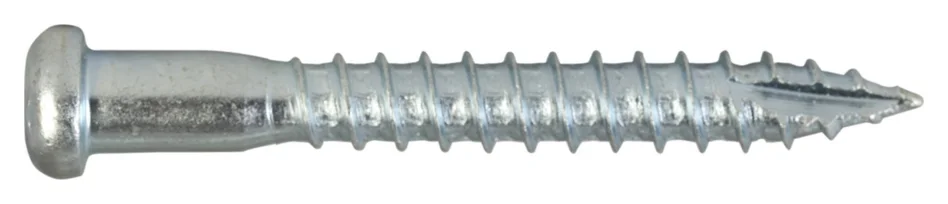
Connector screws for brackets and plates, zinc-plated
3 sizes · 5 × 40 – 5 × 60 mm · Boxes from 12.19 €
EASY-FIX connector screws are made for fixing perforated angles, plates, joist hangers and other metal connectors to timber. Every screw in the line is 5 mm in diameter, with a Torx TX 20 drive and a zinc-plated finish. They suit indoor and dry structures, and you choose the length to match the timber member.
- Brand
- EASY-FIX
- Drive
- TX 20
- Diameters d
- 5 mm
- Lengths L
- 40–60 mm
- Per box
- 250–500 pcs
| Size | Code | Pack | Box price incl. VAT | Price per piece | Availability | Order | |
|---|---|---|---|---|---|---|---|
| 40 mm | EASY-BS-40 | 500 pcs | 17.09 € | 0.034 €/pc | In stock | 500 pcs · In stock · 0.034 €/pc | |
| 50 mm | EASY-BS-50 | 500 pcs | 20.89 € | 0.042 €/pc | In stock | 500 pcs · In stock · 0.042 €/pc | |
| 60 mm | EASY-BS-60 | 250 pcs | 12.19 € | 0.049 €/pc | In stock | 250 pcs · In stock · 0.049 €/pc |
Price per box, incl. VAT
What they are for
Connector screws fix perforated angles, plates, joist hangers, rafter ties and other metal connectors to timber. They are used in timber frame construction, roof and floor structures, loft conversions, and in shelving or workshop frames where timber parts are joined with metal brackets. All screws in this line share the same 5 mm diameter and TX 20 drive and differ only in length, so one bit covers the whole job.
Coating and where to use them
The screws are zinc-plated. Zinc protects the steel from rust in dry conditions, so these screws are meant for indoor and dry structures: heated buildings, lofts and intermediate floors. For damper locations there are connector screws with a C3 coating, and for outdoor work choose C4 outdoor screws. In treated timber containing copper compounds, zinc corrodes faster, so a more durable coating is needed there too. Do not use zinc-plated screws with stainless steel connectors, as dissimilar metals encourage corrosion when damp.
How to choose the length
Connector steel is only a few millimetres thick, so almost the whole length of the screw goes into the timber. A longer screw holds better, but the timber must be thick enough for the tip not to break through the far side and for the wood not to split. The shortest length suits thin connectors and slim battens or boards; the longer ones suit solid beams, joists and rafters.
The capacity of the joint does not depend on the screw alone. It is affected by:
- timber species, moisture content and condition;
- distance from the screw to the edge and end of the timber;
- the number of screws and their pattern in the connector;
- the direction of load: withdrawal, shear or a combination.
For loaded joints, the number and length of screws come from the connector maker's instructions or the designer's calculation.
Fixing tips
Use a good TX 20 bit. It does not cam out of the Torx recess, and the head stays intact even on large jobs. In spruce and pine a pilot hole is usually unnecessary, but near an edge or in hardwood a small pilot hole helps prevent splitting. Slow down at the end so the head seats the connector firmly without sinking into the timber. Fill the holes the maker specifies, and avoid driving into cracks or knots. Boxes contain 250 or 500 pcs depending on length.
Frequently asked questions
Can these screws be used outdoors?
No. Zinc-plated screws are meant for indoor and dry structures. Outside, the zinc layer wears quickly and rust weakens the joint. For outdoor work choose C4 outdoor screws, and for damp locations under cover use connector screws with a C3 coating.
How many screws should go into one angle bracket or plate?
That comes from the connector maker's instructions or the design. You often do not need to fill every hole, but the holes shown in the fixing pattern must be used. With fewer screws, the joint may not carry the intended load.
Can I fix connectors with drywall screws or ordinary wood screws?
It is not recommended. Drywall screws are brittle and can snap under load, while slim wood screws hold less well and do not suit the holes in perforated connectors. Use screws made for connectors, or anchor nails.
Do I need to drill a pilot hole first?
In softwood, usually not: the screw can be driven straight through the connector hole. If the screw is close to an edge or end, or the timber is hard or very dry and prone to splitting, drill a small pilot hole first.
Whole category «Construction screws»
- Venipak courier — 4.99 € up to 150 €, 9.99 € up to 300 €To your door across Latvia. Shipped within 1–2 working days after payment.
- From 300 € — free deliveryCourier to your door or the supplier’s transport to your site — the day is agreed by phone.
- Invoice for companiesWith your details and VAT number, automatically. Payment by bank transfer.
- 14-day right of withdrawalYou can withdraw from the purchase within 14 days.